Posted in Intentional lifestyle

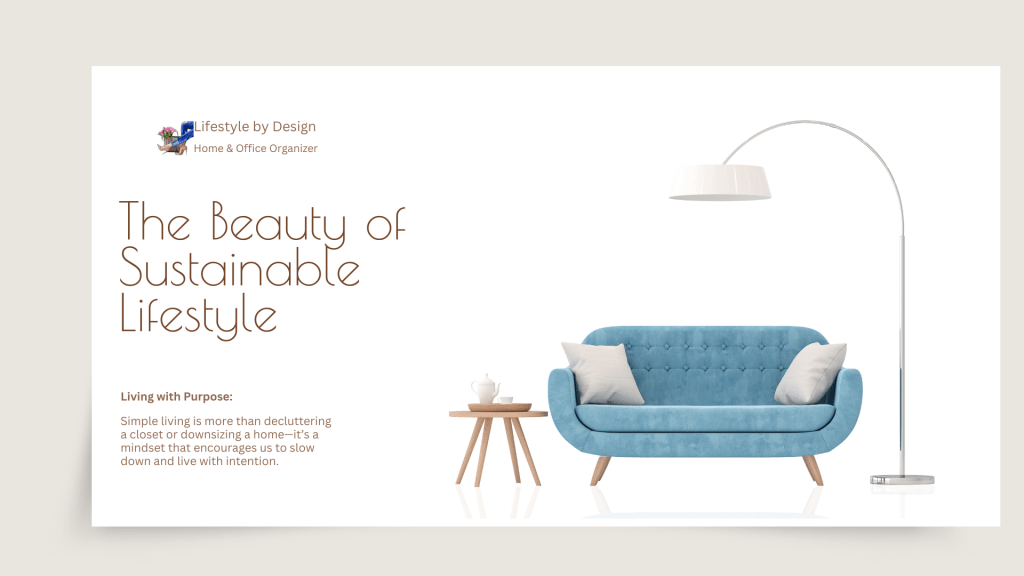
The Beauty of Sustainable Lifestyle

CHAPTER ONE: Less is a Mess Until It’s Bliss

Simple living is more than decluttering a closet or downsizing a home—it’s a mindset that encourages us to slow down and live with intention. At its core, it’s about removing excess not only from our physical spaces but also from our mental, emotional, and spiritual lives. In doing so, we create space for clarity, peace, and deeper meaning.

Rather than measuring life by what we accumulate, simple living invites us to value the quality of our experiences, relationships, and inner growth. In a world dominated by consumerism and constant noise, it’s easy to confuse busyness with purpose. Simple living challenges this mindset, prompting us to reassess what truly matters. It suggests that a life overloaded with possessions, obligations, and endless striving can often feel empty rather than fulfilling.

By intentionally choosing simplicity, we begin to notice the richness in small moments: the warmth of a morning cup of tea, the beauty of nature outside our window, or the joy of an unhurried conversation with a friend. These are the often-overlooked treasures buried beneath the clutter of modern life.

At its foundation, simple living is not about deprivation. It’s not about giving up what we love, but aligning our lives with what we value most. It begins with asking: Do I need this? Does this serve me? Does this contribute to my well-being or distract from it? These questions help us intentionally curate lives that support balance and harmony.

Simplicity empowers us to focus our time, energy, and resources on what nurtures us rather than what depletes us. Ultimately, it offers freedom—freedom from the pressure to constantly consume, from the weight of comparison, and from the illusion that more is always better.

This philosophy opens a door to a slower, more mindful way of being—one in which we reconnect with our authentic selves. In this space, we are no longer defined by what we own or how much we do, but by who we are and how we choose to live. This chapter lays the groundwork for embracing simplicity—not as a fleeting trend, but as a fulfilling way of life rooted in depth, peace, and joy.

CHAPTER TWO: Your Stuff is Not Your Soulmate (Probably)

Let’s be honest: some of us are in committed relationships with our stuff. That T-shirt from 2008? “It still fits… emotionally.” The pasta maker you used once? “It might come in handy during the next carb crisis.”

But here’s the kicker—most of our stuff doesn’t love us back. It doesn’t bring joy; it just hogs our space and collects dust like it’s starting a collection.

The key to sustainable living is understanding the difference between wanting and needing. (Spoiler: You probably don’t need that third garlic press.) When we stop accumulating things like we’re trying to win a loyalty card from Amazon, we reduce waste, save money, and free up mental space.

Try this: The next time you’re about to buy something, pause and ask, “Do I need this, or am I just trying to impress the neighbor who owns a salt lamp and a Tesla?” If it’s the latter, walk away proudly. You just saved yourself from clutter and existential regret.

Living sustainably doesn’t mean you must fit all your belongings into a backpack and move to a treehouse (unless you’re into that). It means being intentional: choosing quality over quantity, and making space for what actually matters—like spontaneous dance parties in your living room.


CHAPTER THREE: Eating Green Without Turning Into a Kale Cultist

You’ve probably heard the phrase “You are what you eat.” If that’s true, some of us are approximately 47% potato chips.

Sustainable living starts at the table. But let’s clear this up: You don’t need to become a vegan monk who only eats locally-sourced moss. The goal isn’t perfection—it’s progress.

Eating more plant-based meals, reducing food waste, and shopping locally can make a huge impact. Plus, eating veggies doesn’t have to be a flavorless punishment. (We’re looking at you, overcooked Brussels sprouts.)

Hot tip: Plan your meals before shopping. That way, you avoid buying 6 zucchinis you swear you’ll use but inevitably watch wilt into mushy regret.

And remember: composting isn’t just for hippies with backyard chickens. It’s a legit way to give back to the Earth—and it’s strangely satisfying to turn yesterday’s banana peel into tomorrow’s garden gold.

Start small. Swap out meat once or twice a week. Buy from the farmer’s market when you can. And yes, you can still have chocolate—it’s basically a plant. Probably.


CHAPTER FOUR: Energy Vampires and the Art of Unplugging (Literally and Figuratively)

No, we’re not talking about your overly dramatic cousin who drains your soul at family dinners. We’re talking about the other kind of energy vampire—the toaster that’s always plugged in even though it hasn’t toasted anything since 2017.

Our homes are full of sneaky energy suckers. Electronics, lights, heating systems—they’re often running on autopilot while we pay the bill. Sustainable living means becoming a little more aware of what’s on, what’s needed, and what can be turned off (hint: probably everything when you’re not using it).

But let’s zoom out for a second: unplugging isn’t just about appliances. It’s also about our minds. Scrolling social media until our eyeballs hurt doesn’t exactly scream “simple, meaningful life.” Try stepping away from screens once in a while. Go outside. Stare at a tree. Hug it, if you must.

Simple wins:

  • Switch to LED bulbs (they last longer and don’t affect your electric bill).
  • Use a power strip so you can turn off multiple devices with one satisfying click.
  • Air-dry your clothes like it’s 1992. Bonus: it’s free and smells like sunshine.

Remember, saving energy = saving money + saving the planet + becoming slightly smug in a good way.


CHAPTER FIVE: The Joy of Doing Nothing (a.k.a. Sustainable Sanity)

Here’s a radical idea: What if… You didn’t have to be busy all the time?

We live in a world that treats rest like a guilty pleasure. If you’re not multitasking with three to-do lists and a podcast playing at double speed, are you even trying?

Yes. Yes, you are. In fact, doing less can be the most revolutionary act in a world obsessed with more.

Sustainable living isn’t just about what we consume—it’s about how we live. Creating time for rest, reflection, and joy is just as important as composting or riding your bike to the store. Taking care of your well-being helps you show up better for the people and planet around you.

Pro tip: Schedule downtime like you’d schedule a dentist appointment. Call it “soul maintenance” if that makes it feel more official.

Sit. Breathe. Stare out the window. Let your mind wander without needing to fix, scroll, or hustle. You are not a productivity machine. You’re a human being—with permission to chill.

Because in the end, sustainability isn’t about sacrificing joy. It’s about making space for more of it—the real kind, not the kind that comes from flash sales and fast shipping.


Final Thoughts:
Living sustainably isn’t about being perfect. It’s about small steps, conscious choices, and a willingness to laugh along the way. Whether you’re swapping plastic for reusable bags or simply learning to appreciate silence over screen time, you’re making a difference.

And if all else fails—just remember to bring the clothes in if it starts to rain.

Posted in Motivational Mondays

Doing Your Best!

When beginning your spiritual journey or seeking inner peace, avoid demanding perfection from yourself.

It is a common challenge to live up to our own expectations. Even after engaging in a calming practice, such as a yoga session, mindful meditation, or deep breathing, we can still struggle to maintain inner peace. Stressful situations—such as a long queue or heavy traffic—can quickly undermine your sense of tranquility and leave you questioning why your cultivated spiritual equilibrium is so fragile. 

This can lead to feelings of guilt, self-anger, or even hypocrisy for failing to maintain control despite dedicated practice.

However, moving past frustration about perceived setbacks and embracing self-patience will benefit your spiritual growth far more than striving for unattainable perfection. A commitment to a spiritual path or a specific ideology should not automatically translate into an expectation of perfection.

When you approach your personal development mindfully, you allow yourself to fully experience intense emotions, like anger, without feeling that you have failed. The simple act of recognizing and being aware that your feelings are temporary is the first step in restoring internal balance. 

Accept that challenging moments are inevitable and treat your reactions to them as fleeting events, rather than defining aspects of yourself. This practice of acceptance, combined with paying attention to your reactions to learn from them, will enable you to regain your center more quickly in the future.

If you acknowledge what you are feeling and accept the limits of your control over current circumstances, your reactions to challenges will gradually shift. You can learn to allow negative thoughts to enter your mind, recognize them for what they are, and then consciously release them. While you may never achieve a state of flawless peace, you will find serenity in the knowledge that you have done your best.

“Nothing can bring you peace but yourself.” ~ Ralph Waldo Emerson

Peace & Harmony, Coach Cher

Posted in Keeping Kids Organized

Is your child struggling with school paperwork or deadlines?

We Help Organize Kids Too . . . 

LIFESTYLE BY DESIGN ~ Home & Office Organizer can provide ADHD students with the structure and clarity they often need to thrive in both academic and personal environments. Many students with ADHD struggle with time management, clutter, and keeping track of assignments or materials, which can create unnecessary stress and overwhelm. 

Some examples of setting up tailored systems:

  • Color-coded folders
  • Labeled bins & totes
  • Digital or paper planners

An organizer can break tasks into manageable steps and create designated spaces that reduce distractions. This helps students stay focused, know exactly where things belong, and build consistent habits that support learning and daily routines.

Beyond physical organization, a professional organizer can also introduce practical strategies that align with the way ADHD students naturally think and work. This might include using visual reminders, checklists, and timers to reinforce focus, or setting up homework zones with minimal clutter and sensory distractions. 

By coaching students in these techniques and customizing solutions to fit their unique learning styles, the organizer empowers them:

  • Gain confidence
  • Independence & sense of accomplishment. 
  • Improving self-esteem
  • Reducing anxiety
  • Creating lifelong tools for success

Here are 5 simple and effective ideas for setting up a homework station that supports focus and structure for a student with ADHD:


1. Create a Distraction-Free Zone

  • Choose a quiet corner away from TVs, pets, and high-traffic areas.
  • Use a privacy board or tri-fold cardboard to block visual distractions.
  • Keep only the essentials on the desk—like pencils, paper, and a timer—to reduce clutter.

2. Use Visual and Color Cues

  • Label drawers and containers with bright colors for easy organization (e.g., red = math, blue = reading).
  • Hang a simple visual schedule or “Task Tracker” on the wall with steps like Start timer → Do 1 task → Take a short break → Review.
  • Use sticky notes for reminders or motivational quotes.

3. Incorporate Movement Options

  • Add a wobble stool, balance cushion, or fidget band on the chair legs to let them move without leaving the workspace.
  • Allow short movement breaks every 10–20 minutes. Use a timer with a gentle chime to help transition between work and breaks.

4. Include a Sensory-Friendly Element

  • Keep soft textures nearby like a small blanket or stress ball.
  • Use warm lighting or a small desk lamp instead of harsh overhead lights.
  • Calming scents (like lavender or peppermint) can help with relaxation and focus.

5. Add a “Done Zone” and Reward System

  • Have a basket or bin labeled “DONE” for completed assignments—it gives a tangible sense of accomplishment.
  • Pair homework sessions with small rewards (e.g., stickers, 5 minutes of screen time, or choosing a song for the next session).

Is your child struggling with school paperwork or deadlines? Reach out to Coach Cher for support.

organizercoach98@gmail.com / (860)941-8630 Text or Call

Peace & Harmony, Coach Cher

Posted in Wellness Wednesday

A Journey of Self-Discovery

Well-Being and Healing: A Journey of Self-Discovery

In our fast-paced world, mental health often takes a backseat to the daily grind. It’s no surprise, then, that emotional challenges like anxiety and depression are on the rise. Many of these issues have roots in past experiences, such as childhood trauma or difficult relationships.

To start the healing process, a powerful first step is cultivating self-awareness. By tuning into your thoughts, emotions, and body, you gain insight into your inner world and identify areas needing attention and care. This awareness is a cornerstone for achieving a greater sense of peace, clarity, and balance, even when facing life’s inevitable challenges.

Journaling is an excellent tool for deepening this self-knowledge. It serves as a conversation with your mind, heart, and soul, allowing you to truly listen to what they’re communicating. Writing down your feelings and experiences is more than just venting; it’s a courageous act of confronting your pain and sadness. This honest self-exploration is a vital gateway to healing and improved well-being.

The path of healing is unique for everyone, manifesting through various actions such as self-forgiveness, accepting imperfections, releasing the past, practicing self-love, or rebuilding trust. It is meaningful that the words “journaling” and “journey” are so similar, as both imply a personal voyage of transformation and self-discovery.

Make it a practice to write freely each day or week. Don’t focus on perfection; simply let your thoughts flow. Reflect on your successes, your struggles, your current emotional state, your worries, your personal growth, and your aspirations. This habit can illuminate underlying factors affecting your mental health and provide profound self-understanding. Writing from the heart is a powerful and restorative experience.

Peace & Harmony, Coach Cher

Posted in Intentional lifestyle

The Transitions in Life

The Transitions in Life

For something new to begin, an old part of ourselves must sometimes end.

Growth often necessitates the transformation of our inner selves, a process that, while natural and vital, can be painful, confusing, or disorienting. These feelings of confusion and disorientation frequently signal an internal shift, a phenomenon common throughout human life as we progress from infancy through various stages of development. Each transition requires us to bid farewell to a former identity, the self we cultivated for that specific period.

These identities can be deeply intertwined with relationships or careers, and when an internal shift occurs, these external aspects of our lives may become unsettled. A closer examination of these surface-level changes often reveals a deeper, internal metamorphosis. For instance, we might spend a significant chapter of our lives constructing a protective shell to heal from past trauma. 

However, a time may come when this very shell feels restrictive and confining, prompting a desire to move beyond the sanctuary it once provided. The growing part of ourselves cannot thrive within the boundaries of the old self’s protective structure.

The process of shedding an old self and embracing a new identity can evoke a paradoxical blend of exhilaration and sadness. We can find inspiration in observing animals that molt or shed, making way for new skin, fur, or feathers. Keeping a symbol of transformation, such as a duck feather, can serve as a potent reminder that death and rebirth are inherent to nature’s evolutionary design. 

By surrendering to this process, we can release our past selves with love and gratitude, and with an open mind and heart, welcome the new, preparing for the next chapter of our lives.

Here are 5 simple rituals to help facilitate your new chapter of life:

1. Light & Let Go

  • Write down on small slips of paper the habits, regrets, or fears they want to release.
  • Place them in a bowl, safely burn them (or tear/shred them if fire isn’t an option), and say out loud: “I let this go and make space for what’s next.”
  • End by lighting a candle to symbolize illumination and fresh beginnings.

2. Threshold Walk

  • Have yourself stand in a doorway, imagining the side behind you as your past and the side in front as your future.
  • Step through slowly while affirming: “I step fully into my next chapter with courage and openness.”
  • This physical act of crossing creates a sense of transition.

3. Gratitude Release

  • At night, write down three things from the closing chapter that you are grateful for—people, lessons, or experiences.
  • Place the list in a small box or jar as a “memory capsule.”
  • This honors the past while making emotional room for new experiences.

4. Vision Seed Ritual

  • Provide yourself with flower or herb seeds. Before planting, have them speak their intentions into the soil (e.g., “I plant hope, growth, and love for this new chapter.”).
  • As the plant grows, it becomes a living reminder of their new beginnings.

5. Morning Reset Breath

  • Each morning for a week, step outside, close your eyes, and take three deep breaths:
    • Inhale: “I welcome the new.”
    • Hold: “I am present in this moment.”
    • Exhale: “I release what no longer serves me.”
  • This simple daily ritual grounds them in renewal and readiness.

Here’s to new beginnings, Coach Cher

Posted in Intentional lifestyle

Transform your home into a sanctuary of supportive energy by cultivating a stress-free environment.

Our homes, often mere stopovers in our busy lives, can be transformed into true sanctuaries. Just as gardens require tending to bloom, our homes need care to become wellsprings of replenishment and beauty. By treating them as cherished treasures, we can shift their energy and foster a deeper connection to our personal space.

Consider your home as a mirror of your inner self. If its current appearance doesn’t align with how you envision yourself, it can hinder your ability to shine truly. Transforming your home to reflect your inner landscape doesn’t require a complete overhaul or significant expense. 

Simple actions can make a profound difference:

  • Curate your surroundings: Arrange items so that your gaze consistently falls upon the things you love most.
  • Embrace hidden treasures: Bring out cherished items you’ve tucked away, or use your finest dishes.
  • Make small repairs: Address minor issues that can accumulate and detract from your home’s appeal.
  • Declutter and organize: A cost-free way to reduce chaos and invite calm into your space.
  • Rejuvenate with purpose: View the rejuvenation of your personal space as a creative project that enhances well-being and connection.
  • Create space for newness: Donate old items to charity, opening up your home for fresh energy.
  • Streamline daily tasks: Simple strategies, such as storing bills in decorative boxes and designating a specific time to address them, can help reduce stress.
  • Ensure free flow of energy: Remove clutter to allow energy to move freely throughout your space.

Simplifying your home allows your imagination and energy to flourish. By prioritizing your home as the heart of your family’s activities, you gain the freedom to focus on what truly matters: time for yourself, time for loved ones, and time to replenish your energy, enabling you to share more and the world.

Peace & Harmony, Coach Cher

For more in-depth support beyond this article, explore my personalized coaching programs. Schedule a free consultation to discuss what’s preventing you from achieving organized living spaces. We’ll pinpoint your obstacles and create a customized plan to reach your goals. Email: organizercoach98@gmail.com 

Posted in Writing!

My business is intentionally not on Facebook, Instagram, Twitter, or TikTok because I believe in guiding my audience and customers directly, not relying on algorithms to shape their experience.

I want real connections, honest conversations, and a personalized approach that isn’t filtered through trends, likes, or fleeting attention spans. This way, my clients get thoughtful guidance tailored to their needs—not what a platform decides they should see.

Feel free to visit my Substack to read my writings! Your visit is appreciated, regardless of whether you agree with my perspectives. CoachCher’s Substack

Peace & Harmony, Cheryl

Posted in Sustainable Lifestyle

Sustainable Remote Spaces

Sustainable workplace design plays a crucial role in protecting our environment by minimizing waste, conserving natural resources, and reducing pollution. By thoughtfully choosing materials, energy-efficient systems, and eco-conscious practices, we can create spaces and products that support both human well-being and the planet. Embracing sustainable design not only helps combat climate change but also promotes a healthier, more resilient future for generations to come.

7 Sustainable Organization Solutions for the office or remote workspace:


1. Digital Decluttering & Paperless Systems

  • Use cloud storage, task managers (like Trello or Notion), and PDF scanners to reduce physical paperwork.
  • Encourage e-signatures and digital file sharing to avoid printing.

2. Eco-Friendly Office Supplies

  • Choose recycled notebooks, refillable pens, bamboo desktop organizers, and biodegradable shipping materials.
  • Buy in bulk to reduce packaging waste.

3. Secondhand & Upcycled Furniture

  • Source desks, chairs, and storage from thrift stores or local marketplaces.
  • Upcycle old furniture with paint or new hardware to extend its life.

4. Cable Management Using Natural Materials

  • Use cotton or jute cord wraps, wooden cable organizers, or DIY cord holders made from reused items to keep cords neat and natural.

5. Minimalist Design Approach

  • Prioritize “less is more” by only keeping what’s useful, beautiful, or essential.
  • Streamline your workflow with multi-purpose furniture (like a desk with built-in storage).

6. Green Cleaning & Maintenance

  • Use eco-friendly cleaning supplies and microfiber cloths to maintain your space.
  • Create a weekly “reset routine” to sustain tidiness without overconsumption.

7. Indoor Plants for Air Quality & Calm

  • Add low-maintenance indoor plants like pothos, snake plants, or succulents to purify the air and reduce stress.
  • Repurpose jars or mugs as eco-conscious planters.

For further assistance beyond this post, please contact me via email at envisionsdesigns@gmail.com or text me at 860-941-8630 to schedule a brief consultation and determine if my services meet your needs.

Cheryl Camacho ~ Organizer & Owner

Posted in Clean & Tidy

New Newsletter . . .

Transform Your Home: The Power of Organization 

Welcome to our monthly newsletter, THE GRACE NOTES, where we bring tips and inspiration to help you create a more organized, harmonious living space. This month, we’re diving into the transformative power of the home organization process and how it can enhance your daily life.

As we embrace a new month, let’s focus on the power of a well-organized home. 

Here are some impactful tips to help you transform your space:

Step-by-Step Tips for a Clutter-Free Space

  1. Start Small: Think Big: Begin with one room or even a single drawer. Decluttering in manageable chunks prevents overwhelm and fuels motivation.
  2. Declutter with Purpose: Assess each item’s value. If it doesn’t serve a purpose or spark joy, it’s time to let it go. Donate or recycle to reduce waste.
  3. Create Functional Zones: Designate specific areas for cooking, working, and relaxing activities. This makes everything easier to find and use.
  4. Maximize Vertical Space: Use shelves, hooks, and cabinets to utilize wall space. This keeps surfaces clear and the room feeling more open.
  5. Regular Maintenance: Set aside 15 minutes a day for a quick tidy-up. Consistent maintenance prevents clutter from accumulating.
  6. Personalize Your Space: Make your home uniquely yours. Incorporate items that reflect your style and personality while maintaining a clutter-free environment.

A well-organized home not only looks great but also boosts your mental clarity and productivity. Start your journey today and feel the transformative impact of an organized living space.


Why Organize?

A well-organized home is more than just aesthetically pleasing—it’s a catalyst for a healthier, more productive lifestyle. Clutter and chaos can lead to stress, reduce your efficiency, and even affect your mental health. On the flip side, an organized home can create a sense of calm, improve your focus, and give you more time to enjoy the things you love.

The Benefits You’ll Experience

  1. Reduced Stress: A tidy environment can help lower anxiety levels, making your home a true sanctuary.
  2. Increased Productivity: With everything in its place, you’ll spend less time searching for things and more time being productive or relaxing.
  3. Enhanced Creativity: An organized space can inspire new ideas and creative thinking.
  4. Improved Health: Less clutter means fewer places for dust and allergens to accumulate, contributing to better indoor air quality.

Get Started Today

If the thought of organizing your entire home feels overwhelming, remember you don’t have to do it alone. As a professional organizer, I am here to help you every step of the way. Together, we can create a customized plan that suits your lifestyle and transforms your home into a space where you can thrive.

Ready to take the first step towards a more organized life? Contact me today to schedule a consultation and discover how we can bring order and tranquility to your home. Let’s make your dream space a reality!

Happy organizing! Coach Cher


Resources & Tools

Great Complete List! Tidy.com – Cleaning Checklist

I love these products! I have been using them since 1998! Speed Cleaning Products

This is the best product! The Pill (You can purchase at Lowes or Amazon)

After cleaning your fiberglass shower, wax it! RainDance Car Polish